
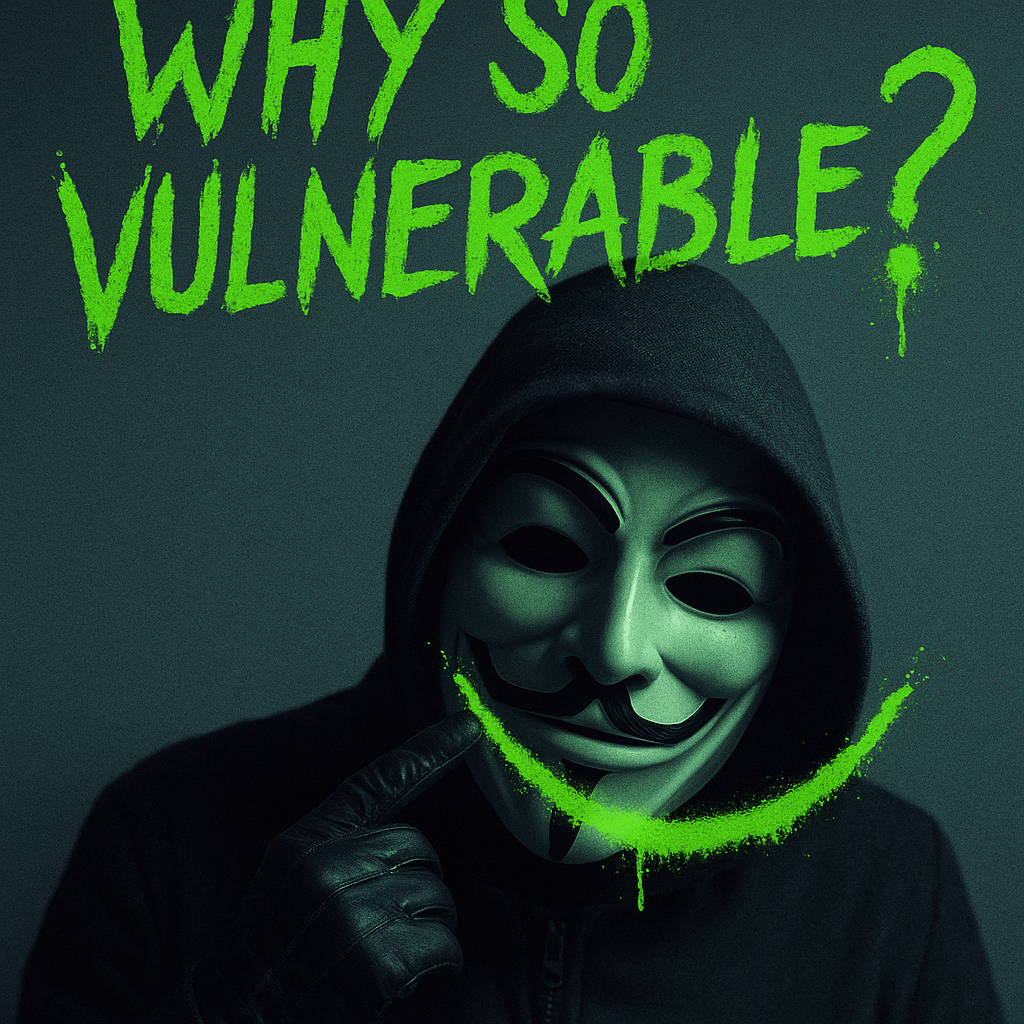
CEO:
What do you want? Money? Crypto? Just name your price.
Hacker:
Ohh, you think this is about money?
You and your boardroom friends still think all cybercriminals want a payout. That’s your problem. You’re predictable.
I’m not here for money. I’m here… for fun.
CEO:
You locked our systems. Our customers, our operations – everything’s down.
Hacker:
Exactly. Beautiful, isn’t it? One little zip file and the empire crumbles.
All it takes is a little push.
CEO:
You’re risking lives! Do you even understand the consequences?
Hacker:
Introduce a little anarchy.
Upset the established order, and everything becomes chaos.
And you know the thing about chaos? It’s fair.
CEO:
You won’t get away with this. The authorities will trace you.
Hacker:
You have nothing. Nothing to threaten me with. Nothing to do with all your strength.
I’m not here to win. I’m here to show your people – your employees – how fragile your fortress really is.
CEO:
What do you want from me?
Hacker:
Let’s play a little game, shall we? One of your backups is clean. The other? Corrupted beyond repair.
You get to choose… or don’t. Watch it all burn.
This is what happens when a ticking time bomb meets an executive still stuck in yesterday’s security playbook.
CEO:
You’re out of your mind.
Hacker:
Oh, I’m not mad. I just see the cracks you pretend aren’t there.
Tell me – did your receptionist think twice before opening that “urgent invoice”?
Did your HR manager verify that job applicant’s resume before downloading the ZIP file?
Did your IT guy patch that exploit… or did he postpone it for next quarter?
You call me insane.
But maybe the real madness… is thinking that ignoring threats keeps them away!
When Hackers Don’t Want Money – They Want Mayhem
This fictional scenario isn’t far from reality. Not every hacker wants a ransom.
Some seek chaos, curiosity, or notoriety. And when leaders assume it’s just about paying to end the problem, they overlook the deeper threat – human error.
How Should Employees Respond When Chaos Strikes?
When the screen turns red, the clock starts ticking. What you do next could be the difference between recovery… and ruin.
Cut the Line
At the first sign of trouble, disconnect your device. Think of it like sealing off a room during a fire – don’t let the flames spread.
Don’t Talk to the Villain
That ransom note? It’s bait. Don’t click. Don’t engage. Don’t try to play the hero. Let the experts take it from here.
Sound the Alarm
Speed matters more than pride. Report the incident immediately through official channels. Silence gives chaos room to grow.
Drop the Mask
Mistakes happen. Don’t waste time pointing fingers – or hiding. Own up, speak up, and let the response team do what they’re trained for.
Follow the Script
Every hero has a playbook. Yours is the incident response plan. Know it. Follow it. It’s not just protocol – it’s survival.
Don’t Let the Credits Roll Yet
After the dust settles, gather the team. Rewind the story. What went wrong? What could change the ending next time?
Turn Awareness into Action
When a ransomware incident unfolds, it’s not policies or PDFs that employees remember – it’s what they’ve experienced.
At Game of Storytelling, we use immersive, story-driven workshops that walk teams through real-world cybersecurity scenarios – without the jargon, fear tactics, or simulations that overwhelm.
When the chaos unfolds, Preparation becomes your greatest asset. You either get your team trained or stay vulnerable enough to be hacked! Discover how our workshops can help your team stay prepared:


 Game of Storytelling